Trennbare Verben
Separable verbs: aufstehen, anfangen, einkaufen
Can use separable verbs to describe daily routines
Look at these examples. Can you spot the grammar pattern?
Ich stehe jeden Tag um 7 Uhr auf.
I get up at 7 o'clock every day.
Wann fängt der Film an?
When does the movie start?
Kaufst du heute ein?
Are you going shopping today?
Pay attention to the highlighted parts. What do they have in common?
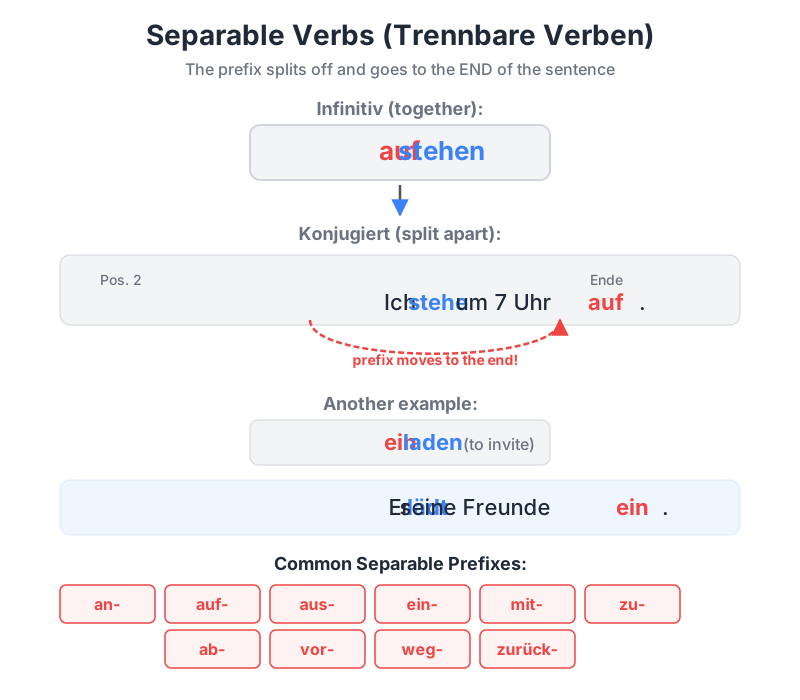
Trennbare Verben haben ein Präfix, das sich in Hauptsätzen vom Verb löst und ans Satzende wandert.
Häufige trennbare Präfixe:
| Präfix | Verb | Beispielsatz |
|---|---|---|
| auf- | aufstehen | Ich stehe um 7 Uhr auf. |
| an- | anfangen | Der Kurs fängt um 9 an. |
| ein- | einkaufen | Wir kaufen im Supermarkt ein. |
| mit- | mitkommen | Kommst du mit? |
| zu- | zuhören | Hör bitte zu! |
| aus- | ausgehen | Wir gehen heute Abend aus. |
Satzklammer: Konjugiertes Verb an Position 2, Präfix am Ende. Alles andere steht dazwischen: Ich stehe jeden Morgen um sieben Uhr auf.
Common Error Patterns
Didn't separate the prefix in main clause
In main clauses, prefix goes to the END: Ich STEHE um 7 Uhr AUF (not: Ich aufstehe)
Separated prefix placed incorrectly
The prefix goes to the very end of the main clause, after all objects and adverbs
Confused separable and inseparable prefix verbs
Separable: an, auf, aus, ein, mit, vor, zu, ab. Inseparable: be, emp, ent, er, ge, miss, ver, zer
Ich stehe jeden Tag um 7 Uhr auf.
I get up at 7 o'clock every day.
aufstehen: the prefix auf moves to the end of the sentence.
Wann fängt der Film an?
When does the movie start?
anfangen: an goes to the end. Note stem change: a → ä.
Kaufst du heute ein?
Are you going shopping today?
einkaufen: ein goes to the end, even in questions.
Prerequisites
Also in Verbs
Practice in course
Apply this grammar in A1 course exercises