Trennbare Verben im Kontext
Separable verbs in shopping and daily contexts
Can use separable verbs in shopping and daily life
Look at these examples. Can you spot the grammar pattern?
Ich probiere den Pullover an.
I am trying on the sweater.
Gibst du das Buch zurück?
Are you returning the book?
Wir nehmen die Kinder mit.
We are taking the children along.
Pay attention to the highlighted parts. What do they have in common?
Trennbare Verben im Kontext — so funktionieren sie in verschiedenen Satztypen.
| Verb | Bedeutung | Beispiel |
|---|---|---|
| anprobieren | try on | Ich probiere die Jacke an. |
| ausgeben | spend | Er gibt viel Geld aus. |
| mitnehmen | take along | Nimmst du die Tasche mit? |
| zurückgeben | give back | Ich gebe das Buch zurück. |
In Fragen: Das Präfix bleibt am Ende: Probierst du die Jacke an?
Im Nebensatz: Das Verb kommt wieder zusammen: ..., weil ich die Jacke anprobiere.
Tipp: Im Wörterbuch erkennt man trennbare Verben am betonten Präfix: an|probieren, mit|nehmen.
Common Error Patterns
Incorrect verb ending for the subject
Review verb conjugation tables and practice matching endings to pronouns
Forgot stem vowel change in irregular verbs
Practice stem-changing verbs (e→i, e→ie, a→ä) with flashcards
Verb placed in wrong position
Remember: V2 in main clauses, verb-final in subordinate clauses
Ich probiere den Pullover an.
I am trying on the sweater.
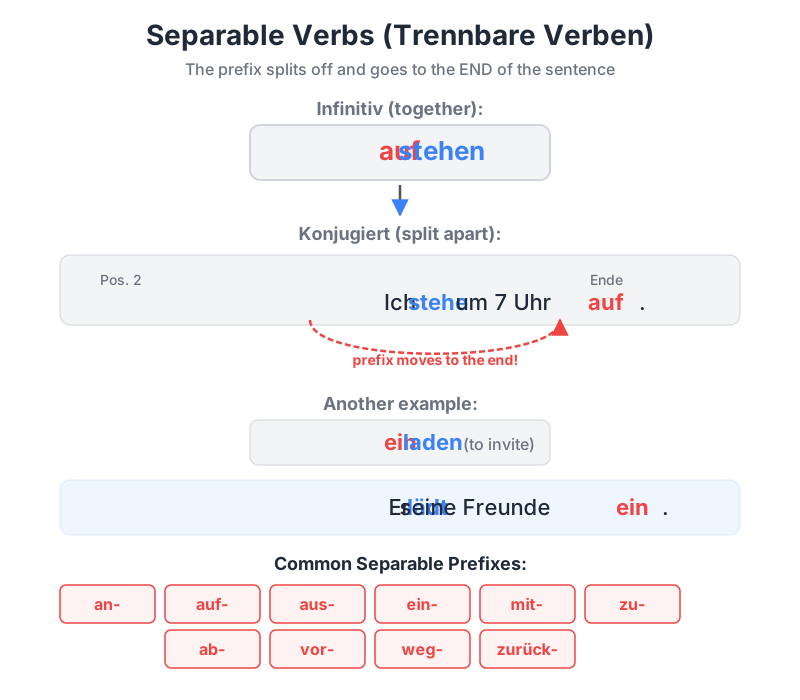
anprobieren: the prefix an goes to the end.
Gibst du das Buch zurück?
Are you returning the book?
zurückgeben: zurück goes to the end, stem change e → i.
Wir nehmen die Kinder mit.
We are taking the children along.
mitnehmen: mit goes to the end.
Prerequisites
Also in Verbs
Practice in course
Apply this grammar in A1 course exercises