Modalverb 'wollen'
wollen for wishes and intentions
Can express wishes and intentions with wollen
Look at these examples. Can you spot the grammar pattern?
Ich will Deutsch lernen.
I want to learn German.
Was willst du am Wochenende machen?
What do you want to do on the weekend?
Wir wollen nächstes Jahr nach Japan reisen.
We want to travel to Japan next year.
Pay attention to the highlighted parts. What do they have in common?
Wollen drückt einen starken Wunsch oder eine feste Absicht aus (want to).
| Person | Form | Person | Form |
|---|---|---|---|
| ich | will | wir | wollen |
| du | willst | ihr | wollt |
| er/sie/es | will | sie/Sie | wollen |
Verwendung: Ich will nach Deutschland fahren. Wir wollen heute Abend ausgehen.
Wollen vs. möchten:
| wollen | möchten | |
|---|---|---|
| Ton | direkt, bestimmt | höflich, zurückhaltend |
| Beispiel | Ich will das! | Ich möchte das, bitte. |
Tipp: Im Restaurant oder Geschäft lieber möchten verwenden. Wollen klingt bei Bitten unhöflich.
Common Error Patterns
Incorrect verb ending for the subject
Review verb conjugation tables and practice matching endings to pronouns
Forgot stem vowel change in irregular verbs
Practice stem-changing verbs (e→i, e→ie, a→ä) with flashcards
Verb placed in wrong position
Remember: V2 in main clauses, verb-final in subordinate clauses
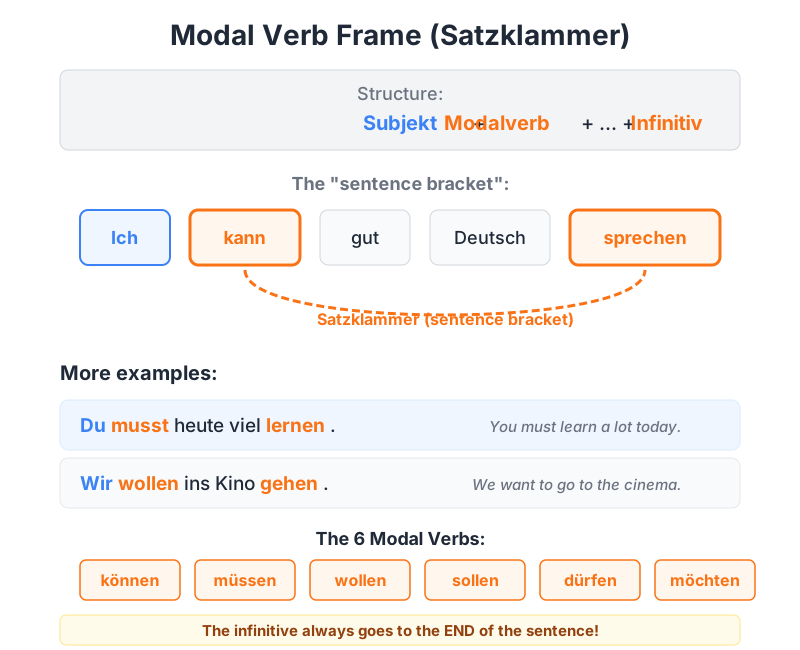
Ich will Deutsch lernen.
I want to learn German.
Wollen + infinitive at the end: a firm intention.
Was willst du am Wochenende machen?
What do you want to do on the weekend?
Willst du + infinitive at the end for asking about plans.
Wir wollen nächstes Jahr nach Japan reisen.
We want to travel to Japan next year.
Wollen for future intentions: wollen + time/place + infinitive.
Prerequisites
Also in Verbs
Practice in course
Apply this grammar in A1 course exercises